
Universally Restorative Gardens: Healing Landscapes, Aging in Place, and Universal Design
Introduction
Gardens have long served as places of reflection, restoration, and renewal. Across cultures and throughout history, landscapes have been recognized not only for their aesthetic qualities but also for their capacity to promote physical and emotional wellbeing. In contemporary landscape architecture and healthcare design, the concept of the restorative or healing garden has gained renewed attention as researchers and practitioners increasingly acknowledge the relationship between natural environments and human health.
A restorative garden is one of several landscape typologies designed to address the physical, psychological, emotional, and social needs of individuals. These gardens incorporate human scale, functional design, and aesthetic richness to create spaces that encourage contemplation, interaction, and healing. They provide opportunities for sensory engagement while supporting independence and dignity for users with diverse abilities.
The importance of such environments is particularly evident when considering aging populations. As people grow older, maintaining meaningful engagement with the natural environment becomes increasingly valuable for sustaining mental health, social interaction, and physical activity. Through thoughtful landscape design guided by universal design principles, gardens can remain accessible and supportive throughout the lifespan.
This paper examines the evolution of restorative gardens, the experiential qualities that make them beneficial to human wellbeing, and the role of universal design in creating inclusive outdoor environments.
Historical Context of Restorative Gardens
The concept of the restorative garden has deep historical roots. In medieval Europe, gardens were integral components of monasteries and hospital courtyards. These landscapes formed part of Christian charitable traditions and were designed to provide comfort and healing for individuals experiencing illness or hardship. Enclosed cloisters often contained medicinal plants, water features, and quiet pathways that allowed patients and caregivers to spend time in natural surroundings.
During the Renaissance and Reformation periods, however, the design emphasis shifted toward ornamental and symbolic landscapes. The evolution of the “paradise garden” aesthetic gradually displaced the functional restorative gardens associated with healthcare institutions. As architectural styles evolved, many hospitals were constructed without significant outdoor healing environments.
A notable exception emerged in the late nineteenth century with the pavilion-style hospital design exemplified by Johns Hopkins Hospital. This model incorporated gardens, sun decks, and roof terraces intended to provide patients with fresh air, sunlight, and views of nature. An enclosed Victorian garden within the hospital grounds reflected a continued understanding of the relationship between environment and healing.
Despite such examples, twentieth-century healthcare design often minimized outdoor landscapes. At the same time, however, the therapeutic relationship between humans and plants began to receive greater clinical attention through the development of horticultural therapy. Horticultural therapy involves the structured use of gardening activities within therapeutic or rehabilitative programs. Over time it became associated with occupational therapy and was formally professionalized in the early 1990s.
Thus, even as restorative gardens declined in some healthcare environments, the therapeutic benefits of gardening and interaction with plant life continued to gain recognition.
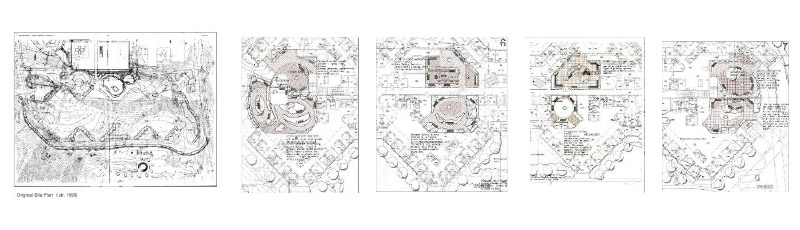
The author shares her conceptual designs for the Royal Inland Hospital, Kamloops, British Columbia. This project began in 1999 in collaboration with LA West Landscape Architects and the Parkin Group. The author was interning as a Landscape Architect candidate during this design project. It was an ambitious project, with the design of 8 courtyards. Royal Inland, also known as, Toko, was to be transformed into a leading edge mental health and rehabilitation facility designed specifically for clients with Alzheimer’s and various forms of dementia; clients who were psychotic or rehabilitating from severe addictions; clients who were criminals and/or extremely violent; and clients who were rehabitating to return to the community. Considerable research went into the design work and it included principles from crime prevention through universal design, as well as design addressing memory loss, invoking social/physical boundaries both hard (as in the use of walls and planting screens) and subtler (as delineating mental boundaries through colour and texture variations in plants selected to garden with. Unique paving patterns helped to differentiate spaces of privacy, spaces of social engagement, and spaces where healthcare personnel could safely interact with the client. It applied much of the author’s research, experience and understanding of healthcare design and nursing care. In addition, the author was programming therapeutic landscaped environments in secured units within a hospital – a forensic courtyard. Unfortunately, the budget on the project was overextended for the nursing care spaces as well as the medical equipment needed for a large, rural hospital, and the work was drastically scaled back to address the building and an exterior garden simply. The project did become LEEDs credited however the contained courtyard spaces originally intended for the site where not built except for one or two general purpose garden spaces around the facility.
The Restorative Experience
Restorative environments support a wide range of psychological and physiological benefits. Experiences within gardens can contribute to emotional stabilization, reduced stress, increased independence, and improved quality of life. Participation in gardening activities can also foster satisfaction, pride, and intellectual engagement while alleviating boredom and social isolation.
Human perception of the environment operates through complex sensory and cognitive processes. The body continuously gathers information about spatial relationships, environmental cues, and physical obstacles. Concepts such as object perception—the body’s intuitive awareness of nearby objects and spatial changes—and body subject—the ability to move through environments without conscious effort—demonstrate the deeply embodied nature of environmental interaction.
Gardens provide an ideal setting for the activation of these sensory processes. The presence of plants, water, textures, and changing light conditions stimulates multiple senses simultaneously. Through repeated interaction with natural environments, individuals can develop heightened awareness and deeper perception of their surroundings.
Beyond sensory engagement, gardens offer psychological reassurance. Plants illustrate cycles of growth, dormancy, and renewal that reflect broader patterns of life. Observing these cycles can cultivate patience, calmness, and acceptance of change.
For individuals experiencing vulnerability— people with disabilities, seniors, and individuals facing emotional stress—gardens may restore a sense of control. Gardening provides purposeful activity within a manageable scale. The act of planting, nurturing, and observing growth reinforces the human capacity to care for living systems.
Gardens also foster social interaction. Community gardens and shared outdoor spaces allow individuals to exchange knowledge, develop friendships, and build social networks. These interactions contribute significantly to emotional wellbeing and community cohesion.
The Circle of Friends group home project is important to share here. Often people with disabilities are sequestered into enclaves of living within an institutional type of setting rather than being integrated into residential communities. The Circle of Friends is in Vancouver, British Columbia, Canada. It was completed and was a collaboration with Our Designs, the author’s company, and Neale Staniszkis Doll Adams, Architects. The group home is located within a neighbourhood of single-family homes and exemplifies the intention of Universal Design to provide socially equitable community development. In otherwords, a community which is planned and designed to accommodate all of its citizens celebrates potential, quality of life, integration, and diversity of ability. The social benefits of integration are clear to everyone. The financial benefits of integration are not as clear in terms of property values when a group home comes into the midst of a residential neighbourhood. Much depends on the tolerance of the neighbourhood. The author believes that children with disabilities have a much easier ability to integrate with children with out disabilities simply because of the open mindedness of all children, especially at younger ages. Such a statement is the material for further research in Universal Design, early childhood development, and the social benefits of early integration aiding childhood development and sense of independence as a child grow into a teenager and young adult.
So how did this project get its name? The Circle of Friends holds meaning to people with disabilities. Often when friends are chatting with each other, their chairs are brought together to form a circle with foot rests facing into the center. The Circle of Friends was designed to accommodate this sociable activity including the opportunity for friends who are ambulatory to also join, perched on the retaining wall surrounding the circle. Behind the retaining wall were tactile and aromatic plants that serve to allow for exploration of the garden by any user, including the user who may be visually impaired or legally blind. The house was built by a local custom home builder for the author’s client, the Vancouver Resource Society. The architects engaged provided flushed thresholds, smart wiring for home security and nursing functions by the attendant nursing staff. The kitchen allowed the occupants to cook on their own as the countertops were adjustable. The back garden was accessed by a ramp and that rear garden had raised flower and vegetable beds. The wheelchair accessible vans were parked in a covered area beside a back lane to the home.
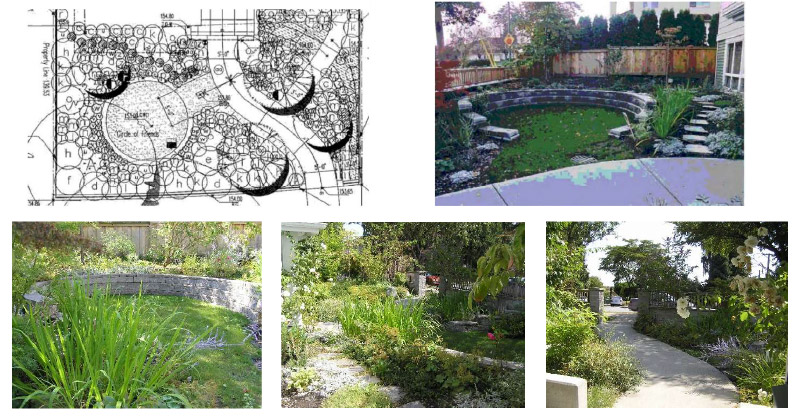
Front Yard Images of Circle of Friends upon installation and 3 years post occupancy.
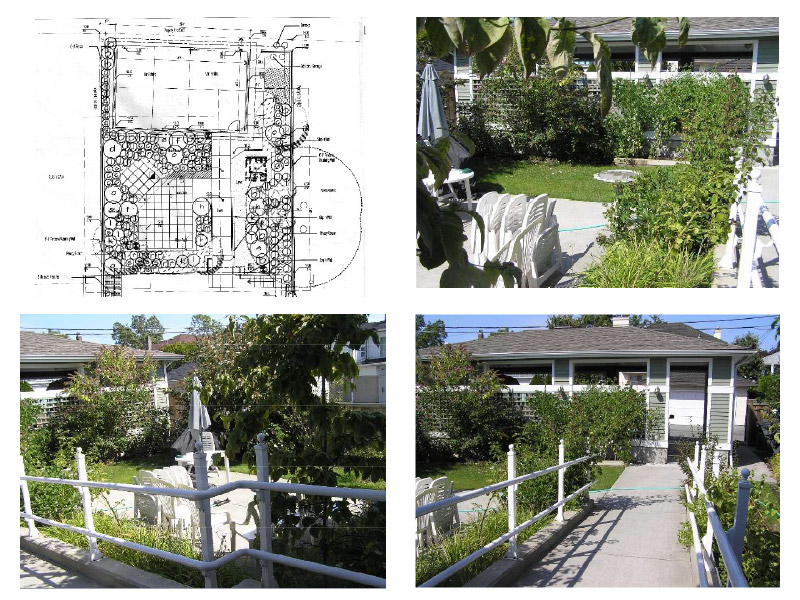
Back Yard Images of Circle of Friends 3 years post occupancy.
Designing for Sensory Engagement and Restoration
The design of restorative gardens requires careful attention to sensory richness, accessibility, and spatial organization. Successful gardens stimulate multiple senses—including sight, smell, touch, and sound—while allowing visitors to explore the landscape comfortably and safely.
Fragrance plays a particularly important role in restorative landscapes. Incorporating multiple scents within different garden sections creates memorable sensory experiences that change with the seasons. Plants such as jasmine, honeysuckle, lemon balm, winter honeysuckle, and magnolia offer distinctive aromatic qualities that enhance the visitor experience.
Textural diversity is equally important. Plants with varied leaf forms, bark textures, and flower structures invite tactile exploration. Raised planting beds positioned between approximately 30 and 43 centimetres in height allow visitors to interact with plants comfortably while standing or seated.
Spatial organization can assist orientation and memory. Dividing a garden into recognizable quadrants connected by a central axis provides clear reference points. Irregular landmarks such as sculptures, distinctive plant groupings, or water features help visitors identify and remember specific locations within the garden.
Comfort and safety remain essential design considerations. Benches placed throughout the garden provide opportunities for rest and contemplation. Pathways should remain unobstructed with adequate overhead clearance and stable surfaces suitable for mobility aids.
Water features add another sensory dimension to restorative landscapes. Small fountains or shallow pools can create gentle sound patterns that enhance tranquility. In some historic gardens, such as those of Moorish Spain, water features were integrated into pathways and architectural elements to produce subtle acoustic effects.
These design strategies transform gardens into immersive environments where visitors can explore, relax, and reconnect with nature.
Gardens and Aging in Place
As populations age, maintaining access to meaningful outdoor environments becomes increasingly important. Many seniors have lifelong connections to gardens and natural landscapes. Gardening, bird watching, walking, and outdoor recreation provide opportunities for physical activity, social interaction, and emotional renewal.
However, aging often introduces physical challenges that can make maintaining traditional gardens difficult. Reduced mobility, joint stiffness, and decreased strength may limit the ability to bend, lift, or perform repetitive tasks. Without thoughtful design adjustments, individuals may lose access to activities that once brought great joy and fulfillment.
Gardens designed to support aging in place allow individuals to adapt their gardening practices while maintaining independence. Accessible pathways, appropriately graded surfaces, and well-placed seating areas enable continued participation in outdoor activities. Raised beds, vertical gardens, and suspended planters allow individuals to garden without excessive bending or kneeling.
Infrastructure planning is equally important. Proper lighting, accessible irrigation systems, and rainwater harvesting solutions can reduce physical strain and improve safety.
When the structural framework—or “bones”—of a garden has been thoughtfully designed, modifications can be implemented gradually as needs change. Replacing high-maintenance plant species with hardy or native varieties can reduce maintenance demands while preserving aesthetic value.
Gardens also contribute significantly to social wellbeing among seniors. Shared garden spaces within retirement communities often foster new friendships and intergenerational connections. Gardening clubs, walking groups, and outdoor gatherings encourage social engagement while strengthening community bonds.
Universal Design and Inclusive Landscapes
Universal design provides a framework for creating environments that accommodate diverse abilities without requiring specialized adaptation. The philosophy emerged in the early twentieth century in response to the rehabilitation needs of veterans returning from war. Over time it has evolved into a guiding approach for inclusive design across architecture, landscape architecture, and product development.
Universal design is defined as the design of products and environments usable by all people, to the greatest extent possible, without the need for adaptation or specialized design. Rather than focusing solely on accessibility compliance, universal design encourages designers to anticipate a broad range of human conditions from the earliest stages of conceptual development.
In 1995, the Center for Universal Design at North Carolina State University articulated seven principles intended to guide inclusive design practices. These principles include equitable use, flexibility in use, simple and intuitive operation, perceptible information, tolerance for error, low physical effort, and appropriate size and space for approach and use.
While not every principle applies equally to every project, together they provide a flexible framework for evaluating and improving design solutions. In landscape architecture, these principles encourage designers to create outdoor environments that support mobility, comprehension, and comfort for individuals with diverse abilities.
Inclusive landscapes strengthen communities by enabling individuals to participate fully in social and civic life. Parks, gardens, trails, and public spaces designed with universal accessibility allow citizens to move freely, gather socially, and engage with their environment.
Conclusion
Restorative gardens represent a powerful intersection between landscape architecture, healthcare, and social wellbeing. These environments support emotional restoration, physical engagement, and social interaction while reinforcing humanity’s enduring connection to nature. As populations age and communities seek more inclusive public spaces, the integration of restorative landscape design with universal design principles becomes increasingly important. Gardens designed with accessibility, sensory richness, and adaptability in mind can support individuals throughout their lives. By embracing restorative and inclusive design strategies, landscape architects and planners can create environments that nurture wellbeing, foster community, and celebrate the diversity of human ability. Such landscapes do more than beautify our surroundings—they sustain the health and vitality of the communities they serve.
Author Biography
Donna M. Rodman, BCSLA, CSLA, is a registered landscape architect, urban geographer, and former registered nurse. Her interdisciplinary background informs her work in therapeutic landscapes (restorative gardens), universal design, and accessible outdoor environments. Ms. Rodman has written and presented locally across Canada and internationally in the United States and Italy on the health and social benefits of gardens and outdoor spaces. For over twenty years she has advocated and practiced for inclusive design and the integration of universal design principles in landscape architecture. Ms. Rodman believes that a community planned and designed to accommodate all its citizens celebrates potential, enhances quality of life, and supports diversity of ability. The social and financial benefits are positive and progressive.